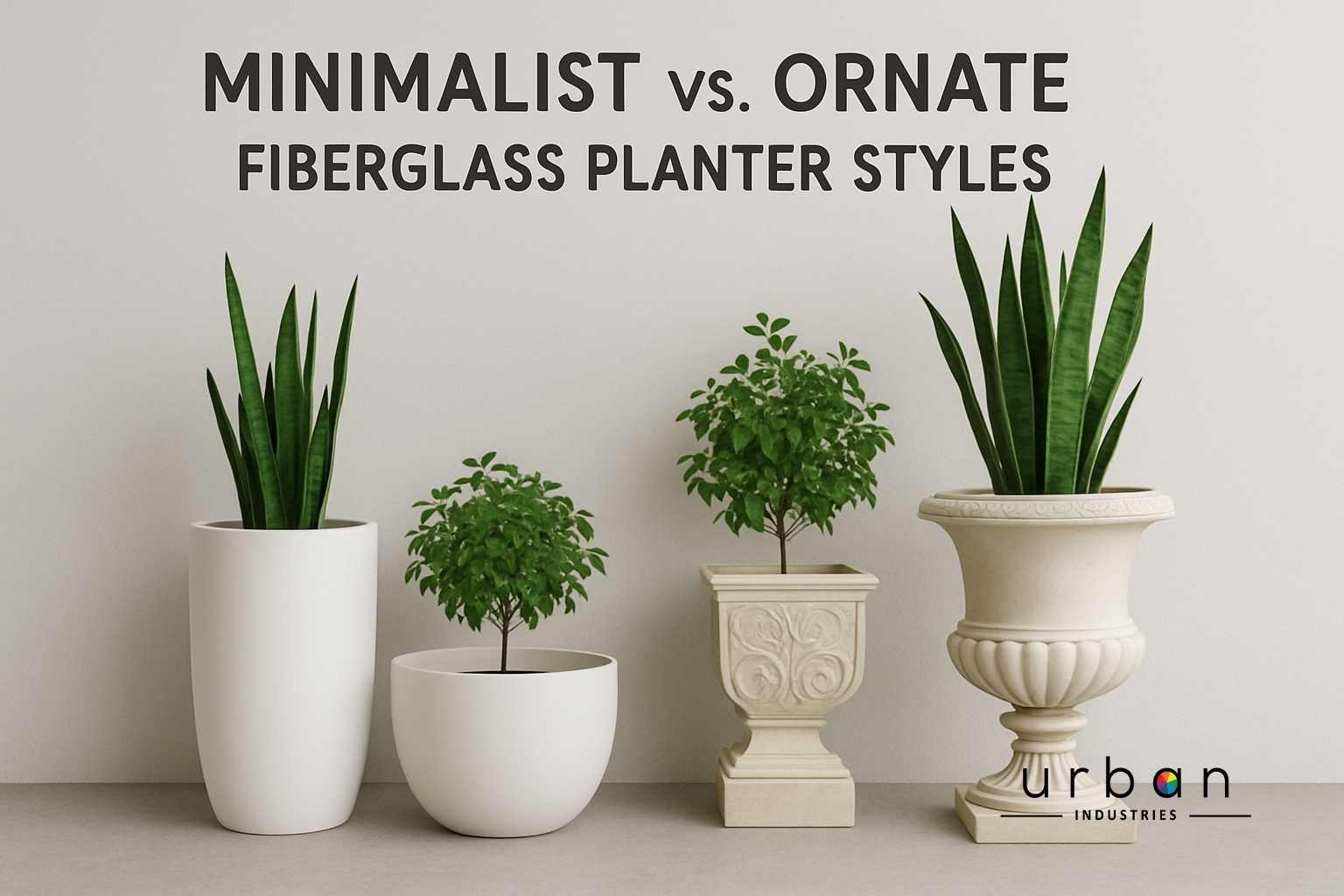
How to Choose the Perfect Planter Color for Your Plants
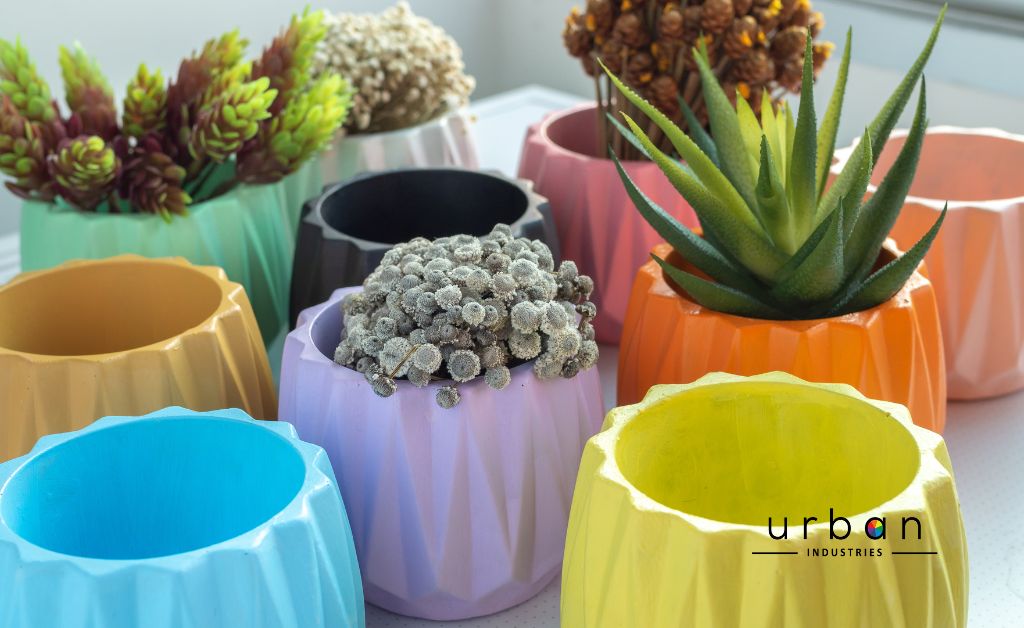
How to Choose the Perfect Planter Color for Your Plants
Choosing the right planter color might seem simple, but it can completely transform how your plants look and how your space feels. The perfect planter color makes your plants stand out, matches your style, and creates the mood you want. Whether you're decorating your home, balcony, or garden, this guide will help you pick colors that make your plants shine.
Why Your Planter Color Choice Matters More Than You Think
Planter colors do much more than just hold your plants. They play a big role in your plant's appearance and your space's overall look. Here's why choosing carefully makes a difference:
- Highlights your plants: The right color makes your plant the star. A good color choice brings attention to your plant's leaves or flowers rather than stealing the show.
- Creates visual harmony: Planters that match your home's colors or outdoor decor make everything look put together and intentional.
- Affects plant growth: Dark-colored planters absorb more heat, which can be good for some plants but bad for others. Light colors keep roots cooler.
- Changes with seasons: You might want bright, cheerful colors in summer and warmer, cozy tones in winter.
- Expresses your style: Your planter colors can show your personality just like your clothing choices do.
Step-by-Step Guide to Choosing Your Perfect Planter Color
1. Start With Your Plant's Needs
Your plant should always come first when choosing a planter color. Different plants work best with different colors:
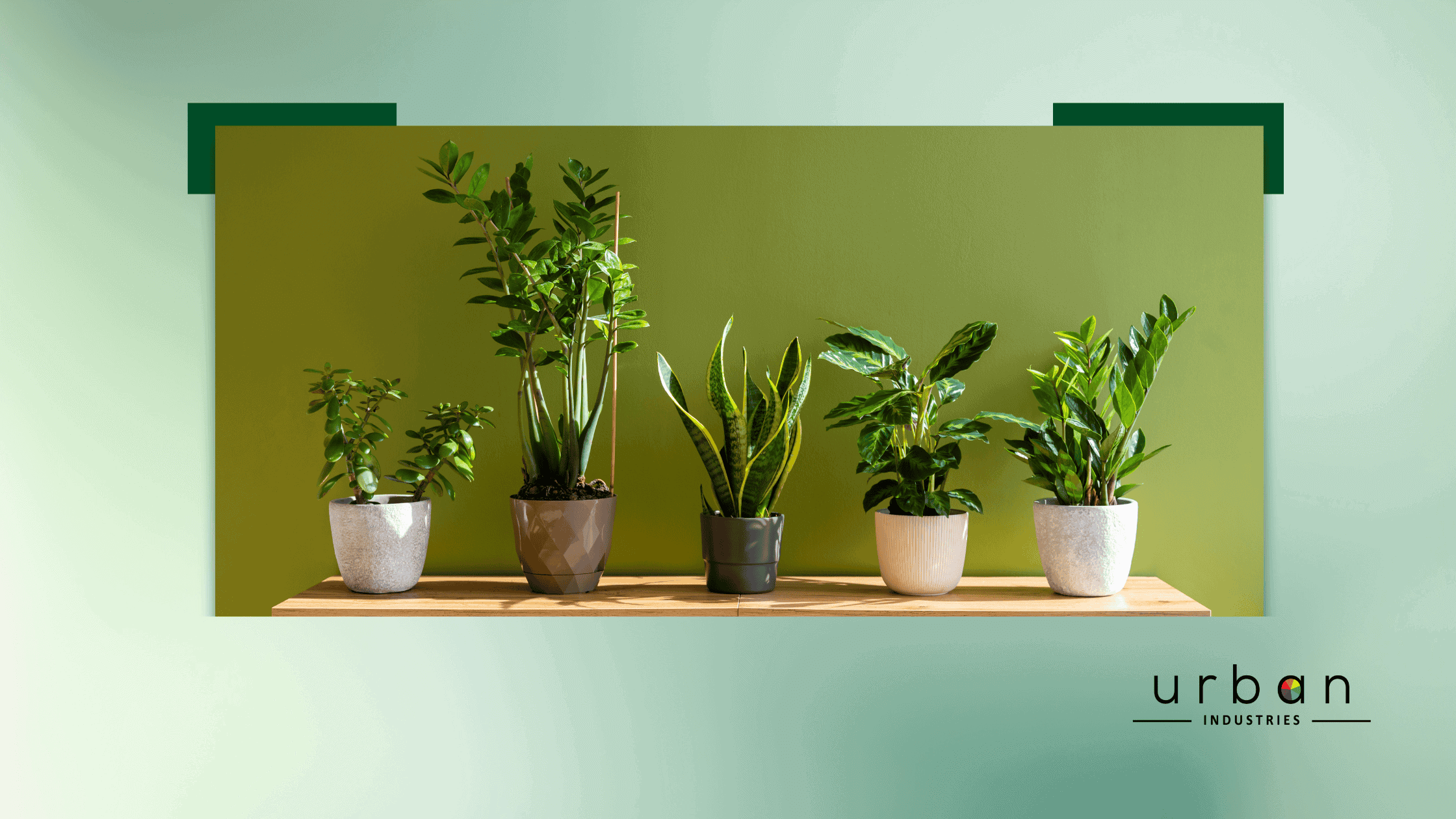
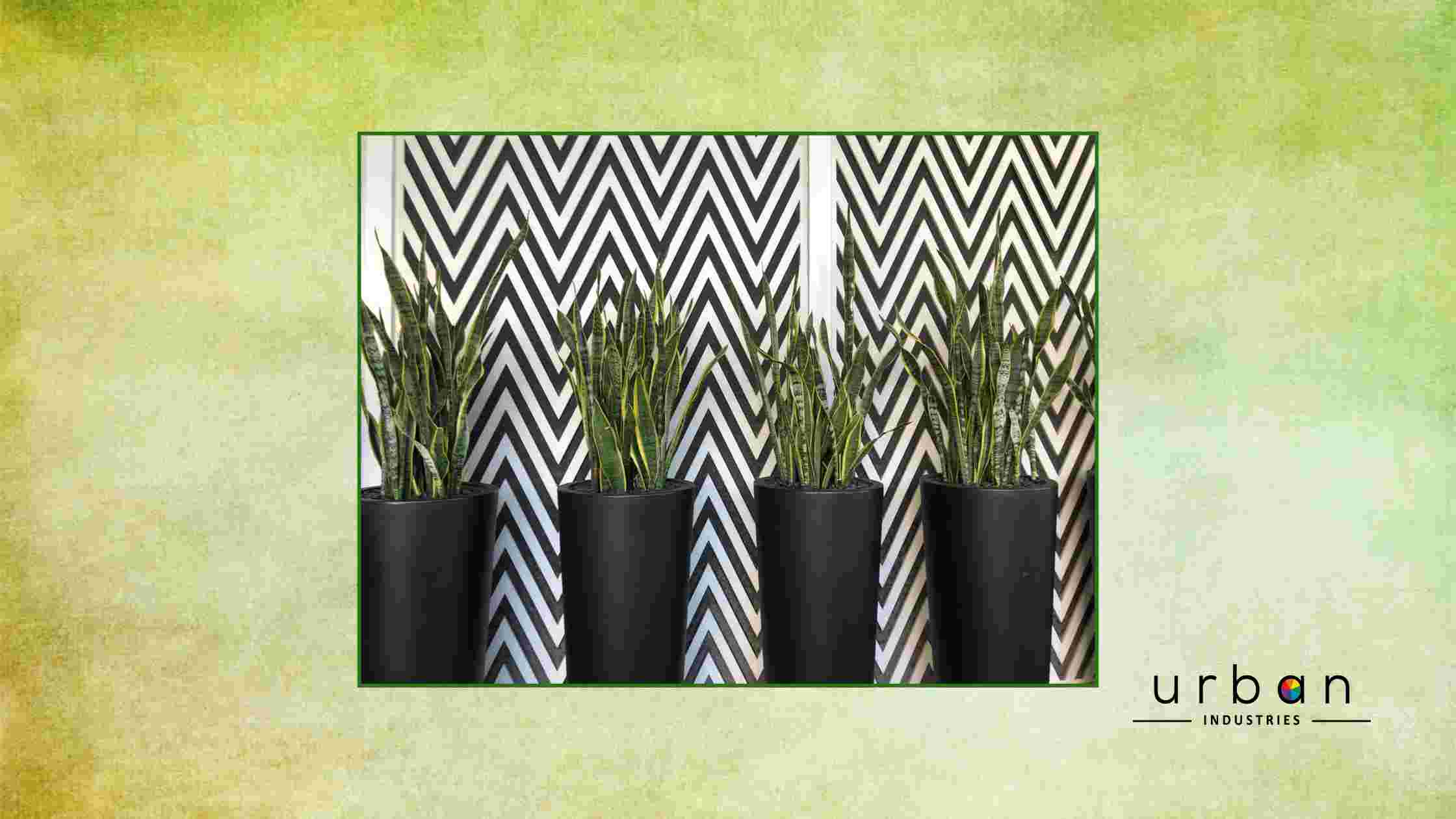
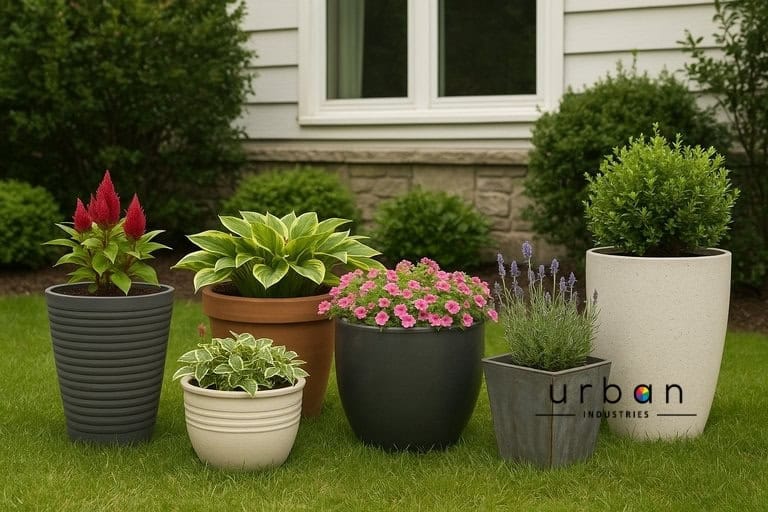
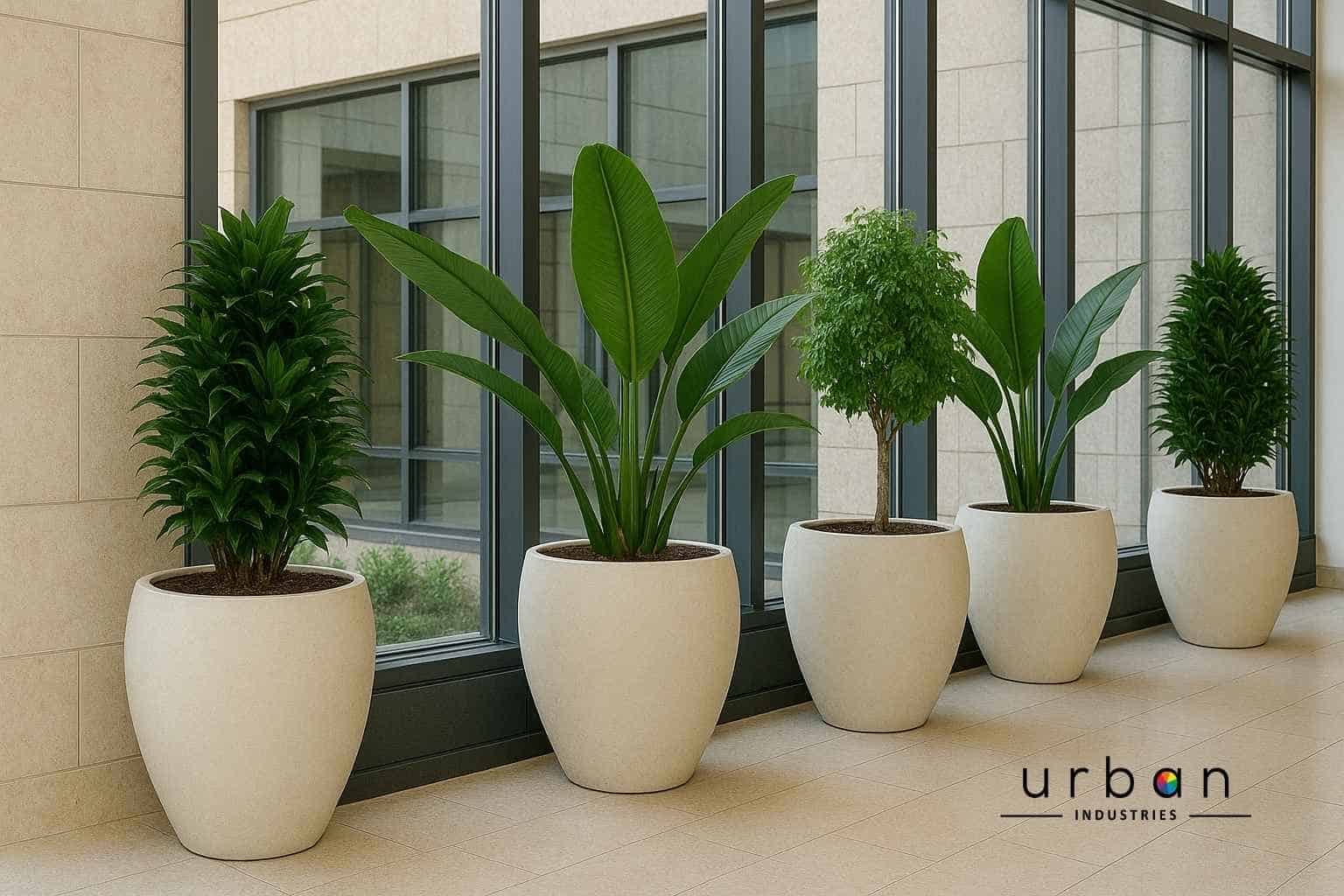
- Green leafy plants: These look fantastic against neutral colors like white, cream, gray, or black. The simple colors let the green really stand out.
- Flowering plants: If your plant has colorful blooms, choose a planter color that doesn't fight with the flowers. Soft, muted colors often work best.
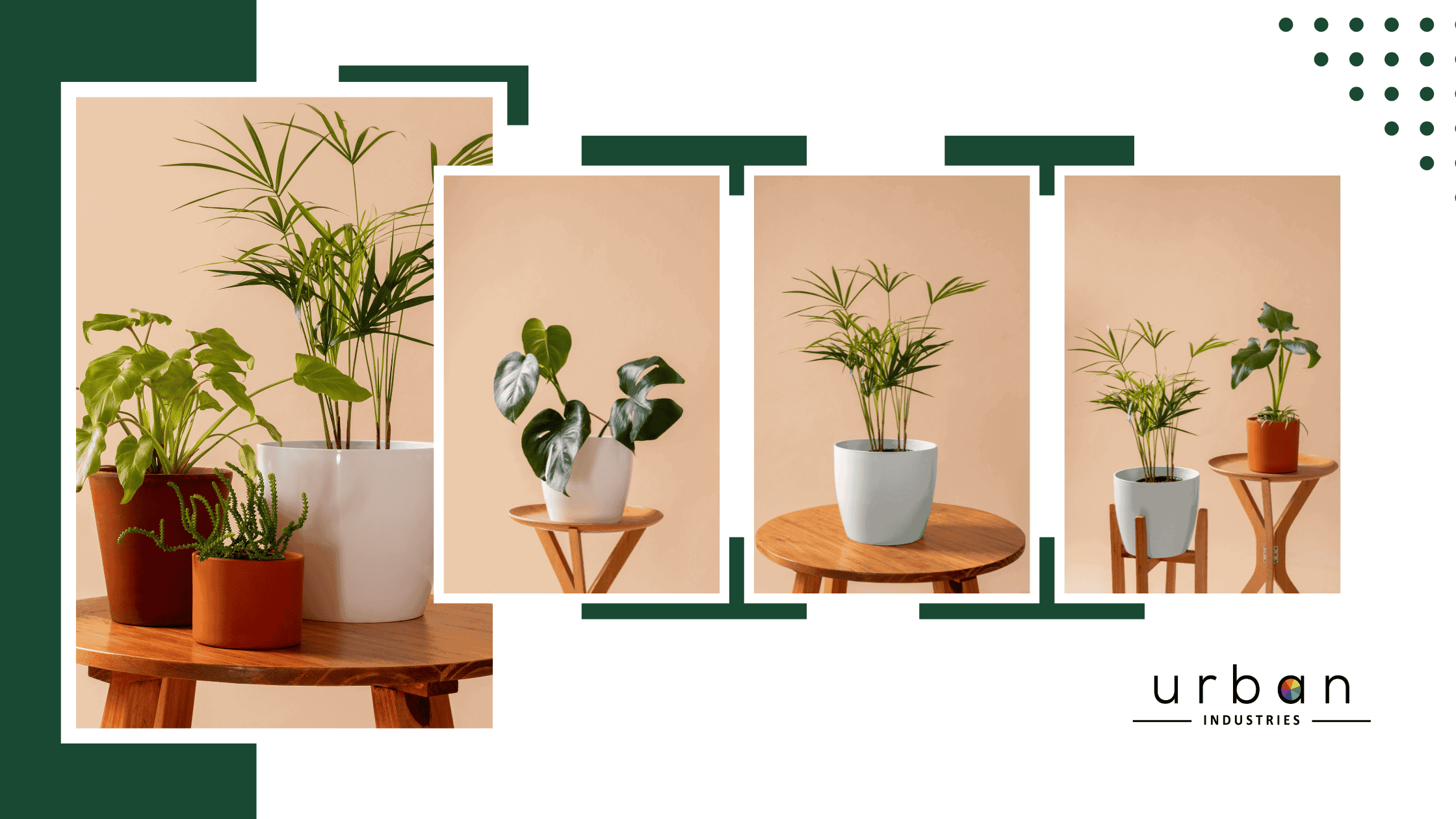
- Succulents and cacti: These desert plants traditionally go with earthy tones like terracotta, but modern looks with pale greens or blues can work too.
- Fruit trees: Deeper colors like navy blue or forest green can make citrus trees and their bright fruits look especially beautiful.
2. Consider Where the Planter Will Live
The location of your planter should guide your color choice:
For indoor planters:
- Match existing furniture colors
- Complement wall colors (but don't match exactly)
- Consider the room's lighting (dark colors in dark corners can disappear)
For outdoor planters:
- Look at your home's exterior colors
- Think about patio furniture colors
- Consider the surrounding landscape colors
Special placement tips:
- Entryways: Brighter colors make a welcoming statement
- Dining areas: Softer colors create calm moods
- Workspaces: Green planters can boost focus
3. Understand How Materials Affect Color Choices
Different planter materials come with different color options and considerations:
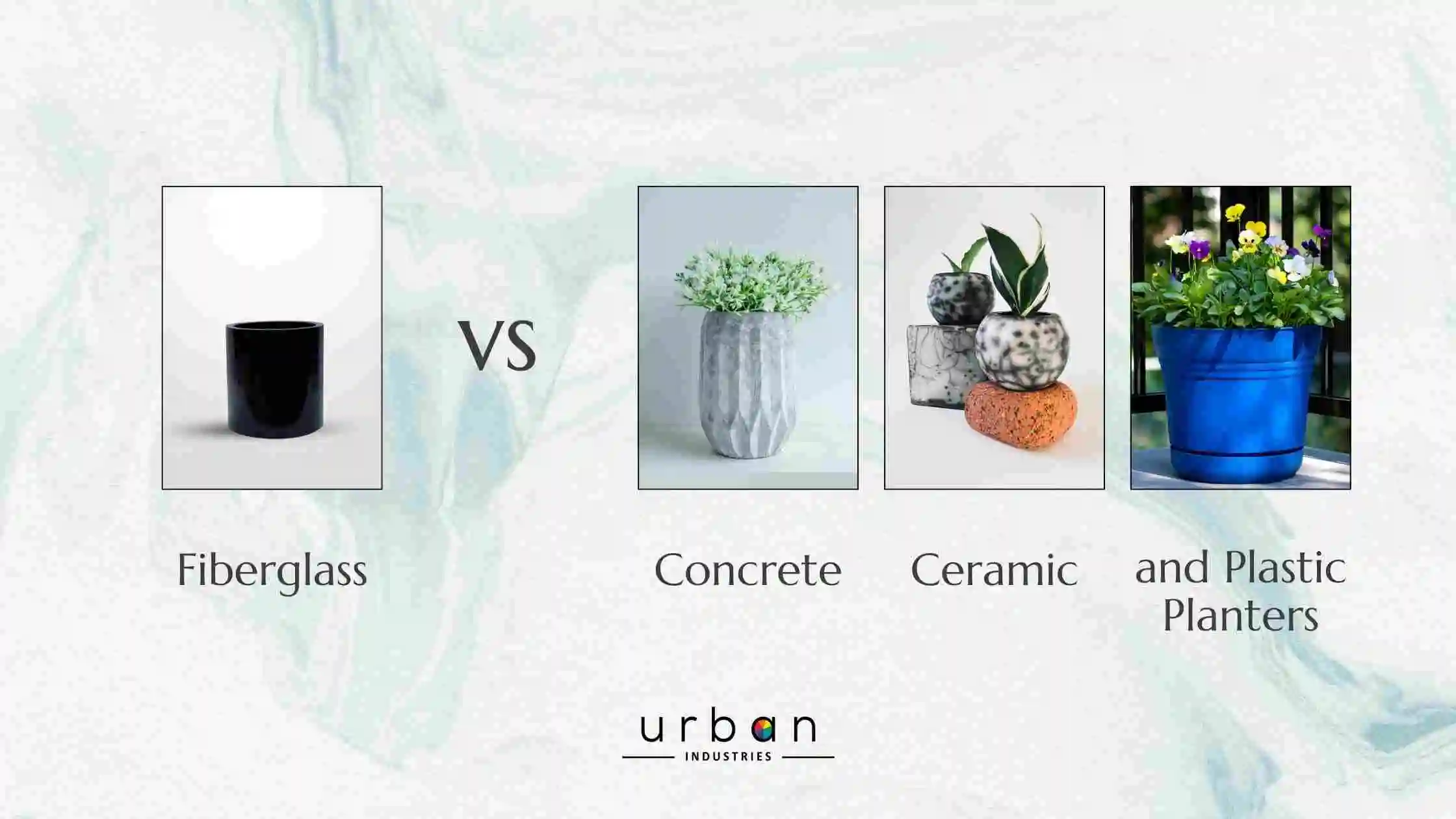
| Material | Color Options | Best Uses | Things To Watch |
| Ceramic | Many colors, often glossy | Indoor use, decorative spots | Can fade in direct sun |
| Terracotta | Classic orange-brown | Traditional gardens, herbs | Shows water stains |
| Concrete | Neutral tones, can be painted | Modern looks, large plants | Heavy when large |
| Plastic | Every color imaginable | Budget options, kids' areas | Can look cheap in bright colors |
| Metal | Metallics, dark tones | Contemporary spaces | Gets very hot in sun |
| Fiberglass | Any color, often matte | High-end look, all uses | More expensive |
4. Think About Seasonal Color Changes
Your planter colors can change with the seasons for fresh looks all year:
Spring:
- Pastel pinks, blues, and greens
- Soft yellows like daffodil colors
- Fresh white for a clean look
Summer:
- Bright corals and turquoises
- Sunny yellows and oranges
- Cool blues and greens
Fall:
- Warm terracottas and browns
- Deep oranges and reds
- Olive and sage greens
Winter:
- Evergreen dark greens
- Cool grays and blues
- Crisp whites and silvers
5. Popular Planter Color Choices and Why They Work
Some planter colors are favorites for good reasons:
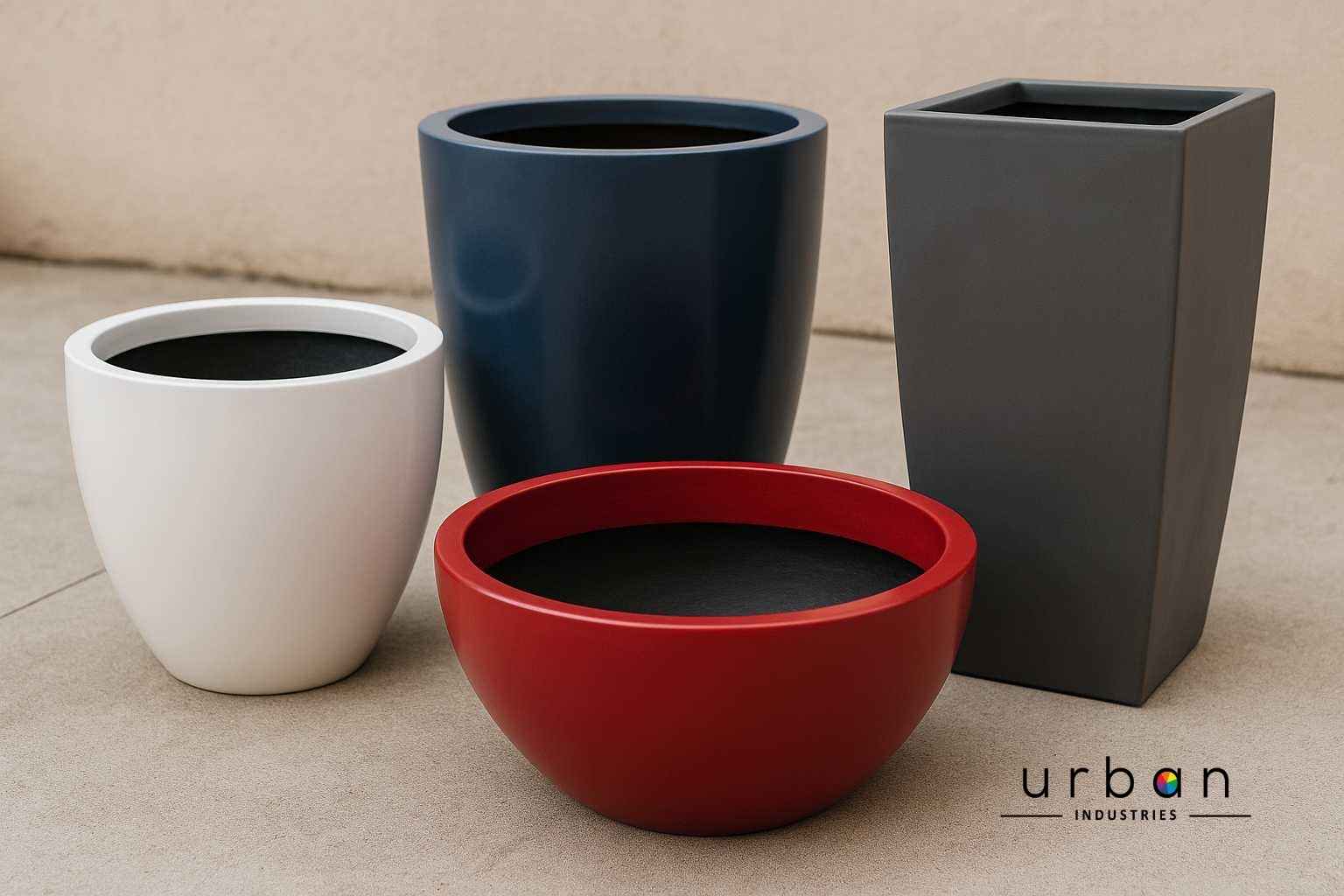
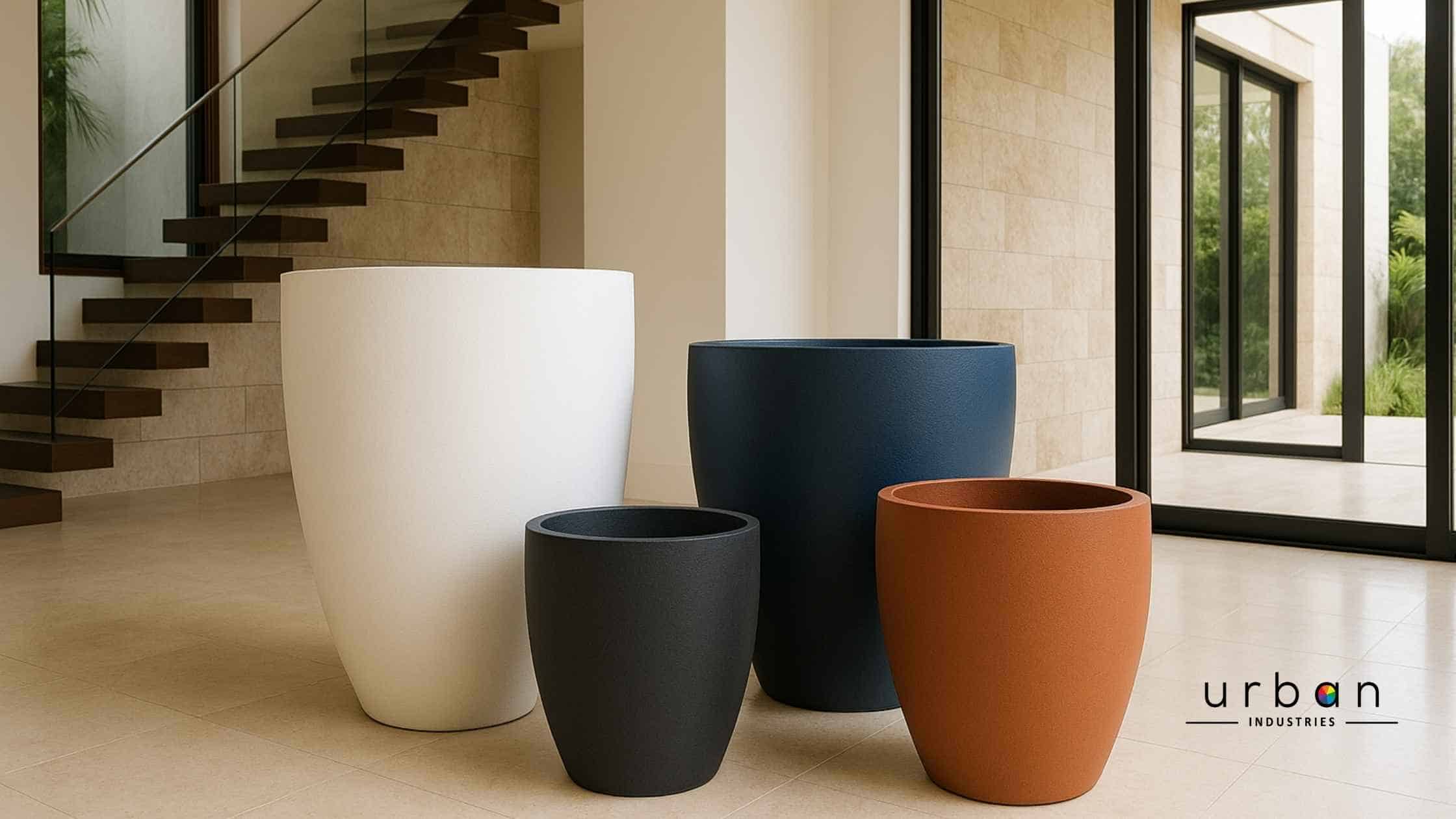
- Classic White
- Makes green plants pop
- Looks clean and fresh
- Works with any style from modern to farmhouse
- Reflects heat to keep roots cool
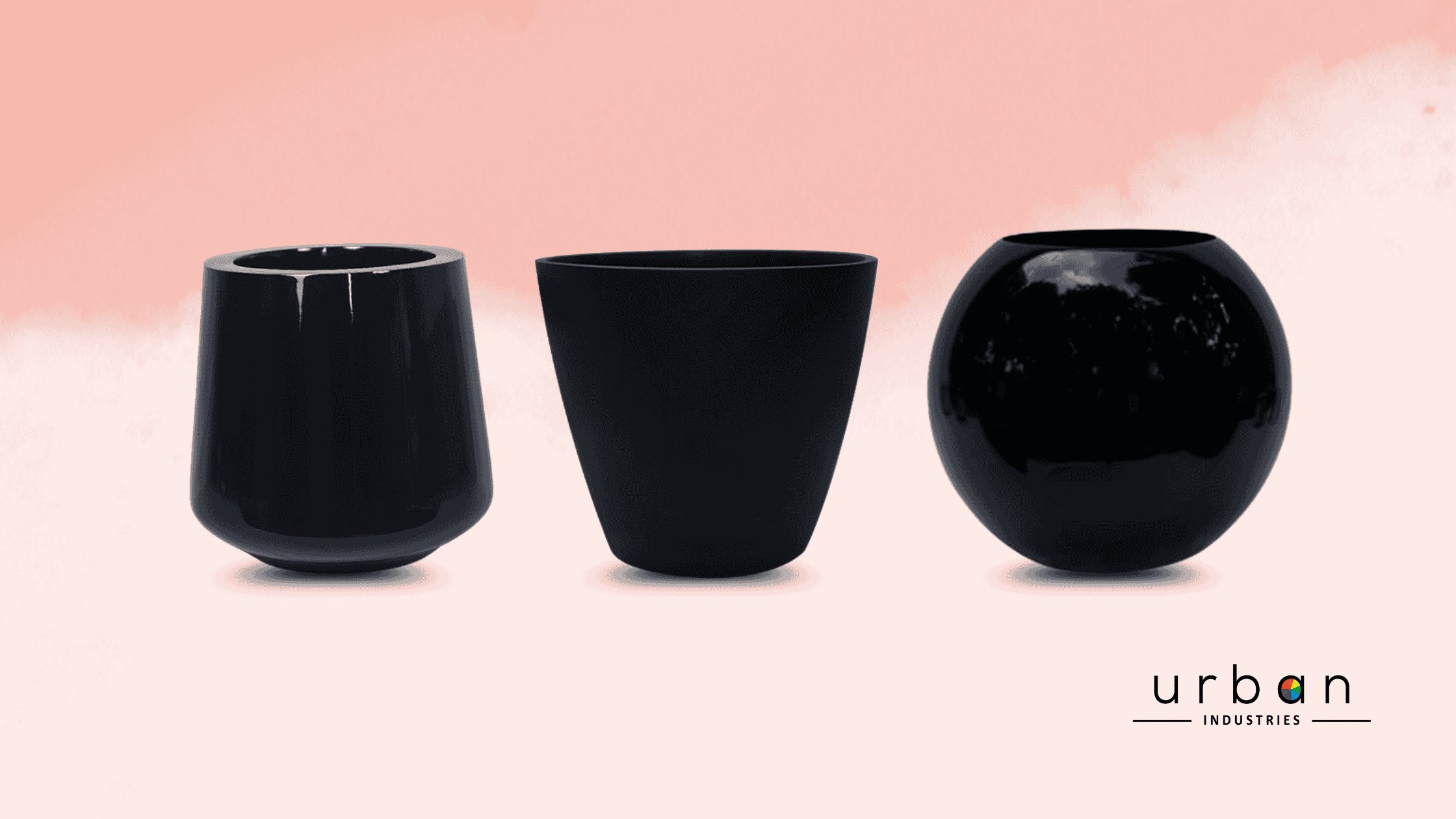
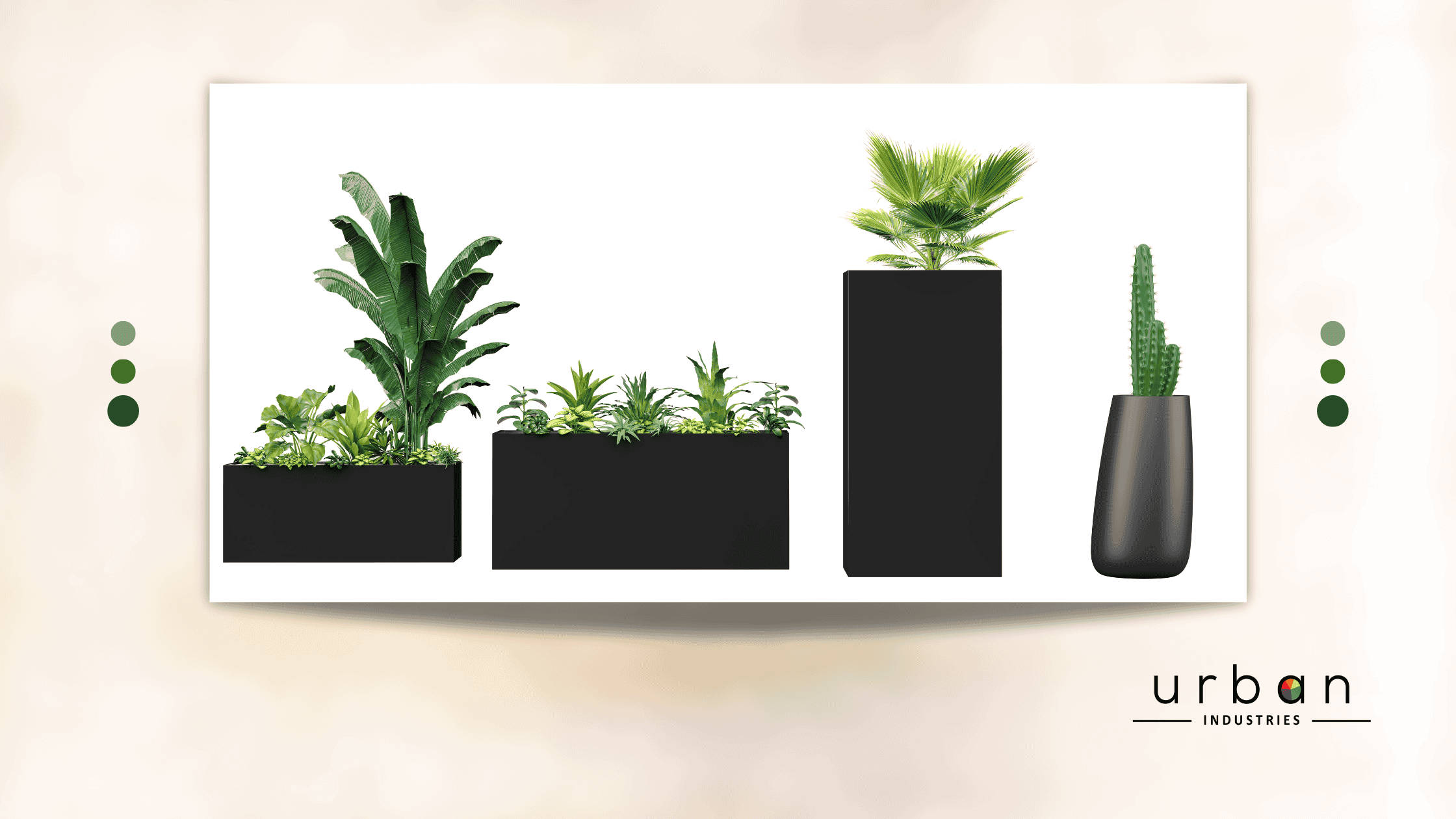
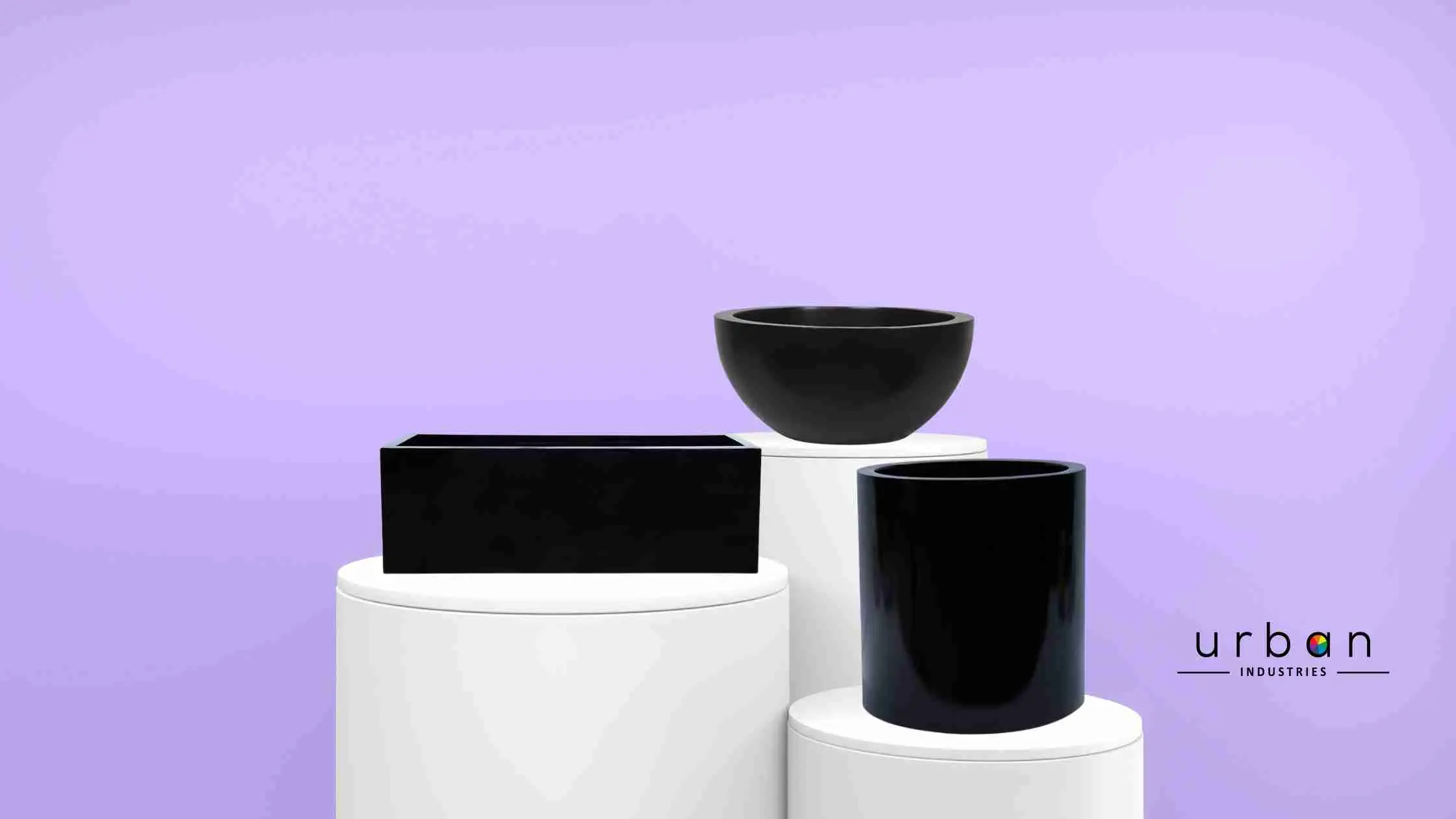
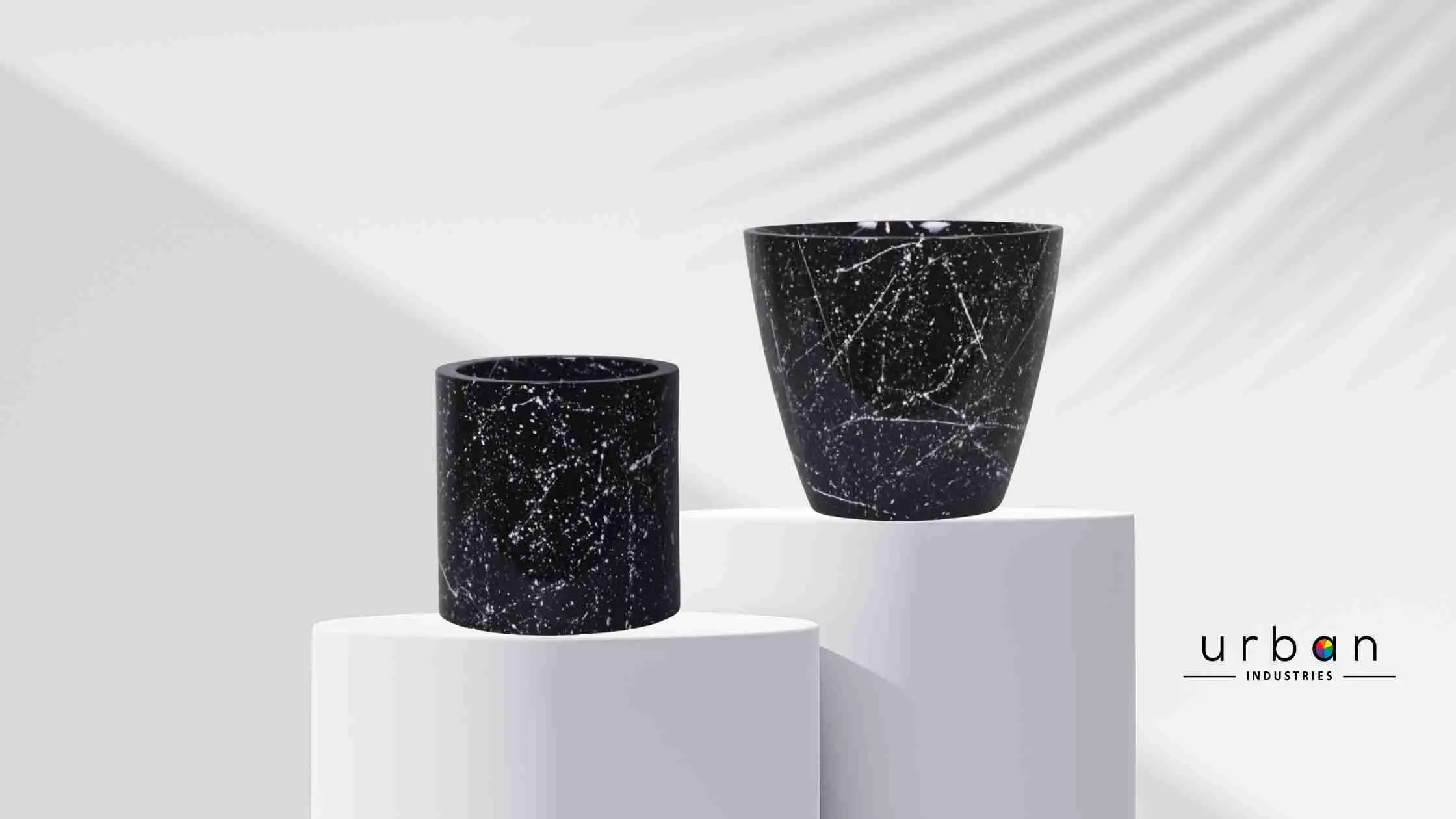
2. Timeless Black
- Modern and sophisticated
- Makes colorful flowers stand out
- Hides dirt well
- Absorbs heat (good for some plants)
3. Natural Terracotta
- Traditional garden look
- Porous material helps plants breathe
- Warm color complements most plants
- Ages beautifully over time
4. Soft Gray
- Contemporary and elegant
- Neutral that doesn't distract
- Works indoors and out
- Great for modern spaces
5. Earthy Greens
- Blends with outdoor spaces
- Creates calm, natural feeling
- Variety of shades available
- Good for large planters
6. Color Combinations to Avoid (Most of the Time)
While you can choose any color you love, some combinations often don't work well:
- Same color as flowers: A red planter with red flowers makes the blooms disappear.
- Too many bright colors: Multiple neon planters can look messy rather than cheerful.
- Dark colors in dark corners: Black planters in shady spots might get lost.
- Overly trendy colors: That bright pink might look dated in a few years.
Creative Ways to Test Planter Colors Before Buying
- Use color samples: Hold paint chips or fabric swatches next to your plants.
- Digital testing: Take photos of your space and edit in different planter colors.
- Temporary solutions: Wrap planters in colored paper or fabric to test looks.
- Start small: Buy one planter in a new color before committing to several.
- Seasonal experiments: Try removable vinyl wraps to change colors with seasons.
Planter Color Picker
Here's a tool to help visualize different planter colors:
How Lighting Affects Planter Colors
Light changes how we see colors, so consider:
- Sunny spots: Bright light makes colors appear lighter and brighter.
- Shady areas: Colors look darker and less vibrant without direct light.
- Indoor lighting: Warm bulbs make colors look yellowish, cool bulbs make colors appear bluer.
- Morning vs. evening light: Test colors at different times of day.
Special Considerations for Different Spaces
Small Spaces:
- Light colors make spaces feel larger
- One bold color makes a statement without clutter
- Matching colors create flow
Large Areas:
- Can handle multiple colors
- Dark colors help define spaces
- Groupings of same-color planters look intentional
High-Visibility Areas:
- Entryways: welcoming colors
- Dining areas: appetite-stimulating colors
- Work areas: focus-enhancing greens and blues
Maintaining Your Planter Colors
Keep your planters looking their best:
- Clean regularly: Wipe down to prevent dirt buildup.
- Protect from sun: Some colors fade in direct sunlight.
- Touch up paint: For painted planters, keep some extra paint for chips.
- Rotate planters: Even sun exposure prevents uneven fading.
Final Pro Tips for Perfect Planter Colors
- Nature knows best: Look at color combinations in nature for inspiration.
- Quality matters: Better materials hold color longer.
- Think long-term: Choose colors you won't tire of quickly.
- Be bold sometimes: One bright planter can be a fun focal point.
- Seasonal changes: Switch up colors with the seasons for fresh looks.
- Personal taste rules: Ultimately, choose colors that make you happy.
Remember, the best planter color is one that makes you smile when you see it and shows off your plants beautifully. Whether you prefer calm neutrals or vibrant brights, your perfect planter color is out there waiting to make your plants shine.